
About Ocean Margins
The ocean margins are some of Earth’s most biologically productive regions but are poorly represented in global climate and carbon cycle models. As the nexus between land, nearshore ecosystems and the pelagic ocean, these regions are sensitive to anthropogenic forcing, which generates biogeochemical impacts that have cascading effects on ecosystem functioning and ocean health, both locally and globally. At the same time, they provide critical ecosystem services to coastal populations.
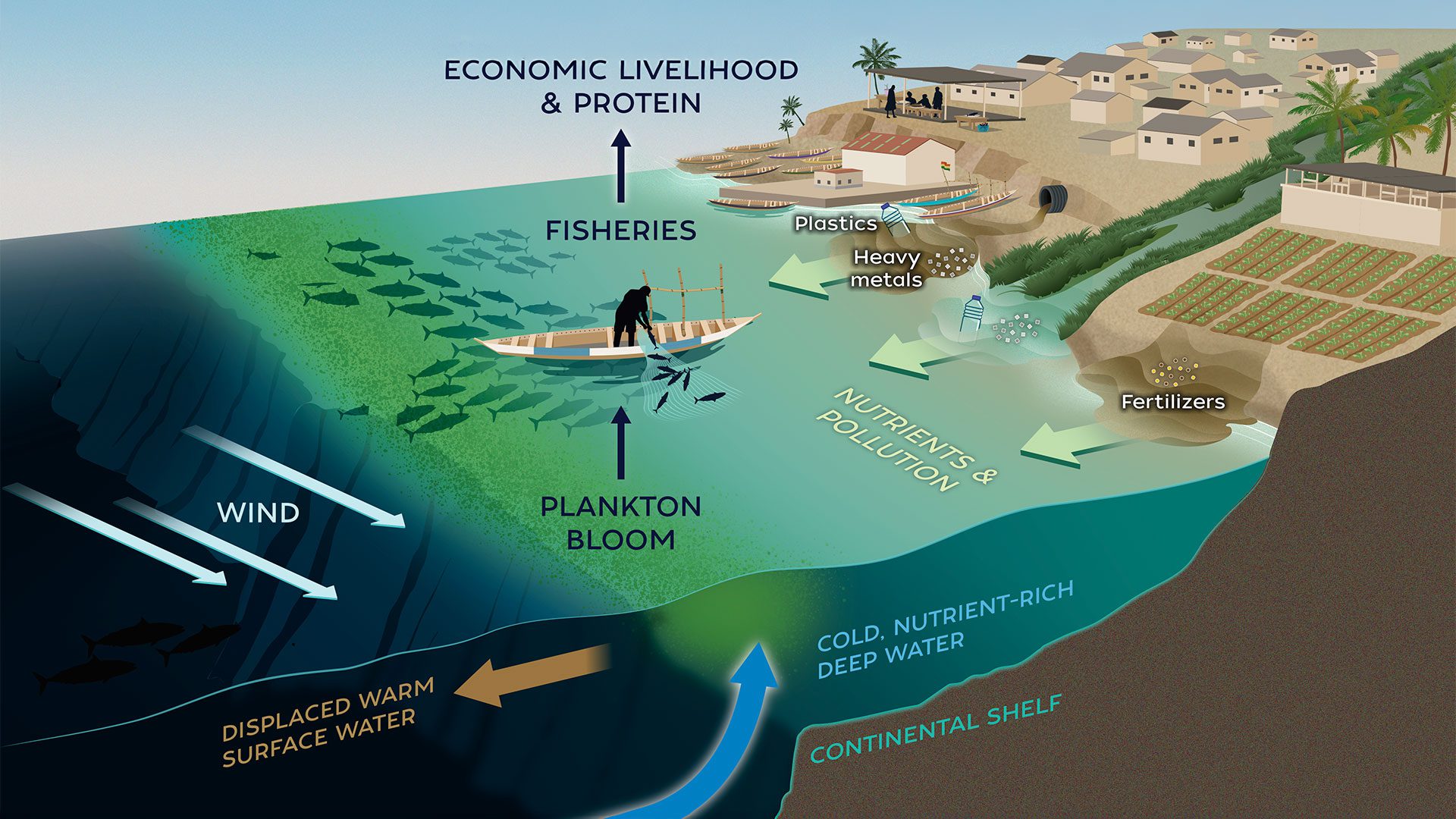
Our overarching goal is to assess and incorporate the effects of an upwelling coastal margin on the basin-wide biogeochemistry. This will be achieved by measuring and modeling the exchange of nutrients and carbon between the coastal and open ocean. The productivity of the coastal ocean will be related to the physical forcing and conditions (e.g. winds and air-sea fluxes, density stratification, topography and remote forcing), the ecosystem (phytoplankton communities, zooplankton abundances) and the production and transformation of different organic carbon pools, and (iii) representing the margins in a global model. Our study will also assess global and local effects on the coastal zone, which directly impacts coastal societies. Ultimately, we will assess the impacts of the margin on an ocean basin. Though we will focus on one site, the longer-term view is to create a framework that can be applied to other regions.